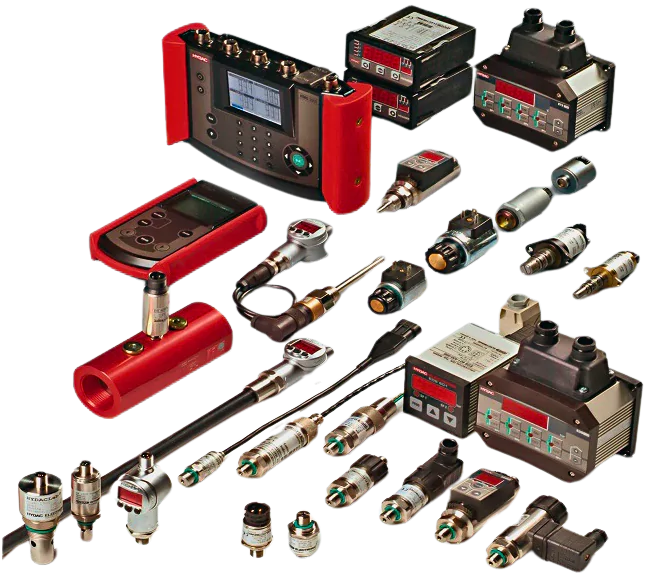
Electrically Operated Valves for Hydraulic Automation
A hydraulic solenoid valve turns an electrical signal into a hydraulic action. When the coil is energised, the solenoid moves a spool or poppet, so a PLC, relay or push button can start a cylinder, change direction, unload a pump or hold a load. Solenoid valves are the link between your control panel and your hydraulic circuit.
Techknow Engineering Enterprise is a hydraulic solenoid valve supplier for power units, presses, machine tools, plant hydraulics and mobile machines. We supply solenoid operated spool valves, seated poppet valves, screw-in cartridge solenoid valves, and the coils, connectors and seal kits that keep them working.

Techknow is an Authorized HYDAC Distributor and also supplies Rexroth, Parker, Yuken, Eaton-Vickers, Bucher, Sun, Beiri and Hawe valves, so we can supply a complete hydraulic solenoid valve, or just the replacement coil, matched to your voltage, connector and mounting. Our team checks these details before we quote, so the valve or coil fits first time.
Solenoid operation is one way of switching a valve, and a solenoid operated directional valve is one type of directional valve. For the full range of directional valves, including pilot, lever and mechanically operated types, see directional control valves, or browse all hydraulic valves.
How a Hydraulic Solenoid Valve Works
Every hydraulic solenoid valve has two parts: the electrical operator (coil and armature) and the hydraulic valve it moves. Choosing both correctly gives reliable switching and long coil life.
Solenoid Spool Valves
The solenoid pushes a spool against a return spring to connect P, T, A and B in different ways. This is the solenoid operated directional valve used on most industrial power units, in 4/2 and 4/3 versions with a choice of spool symbols.
Solenoid Poppet (Seat) Valves
The solenoid lifts a poppet or ball off its seat. With no clearance to leak through, a seated hydraulic solenoid valve holds pressure or a load without drift, ideal for clamping, accumulator and safety circuits.
What to Specify
- Function: 2/2, 3/2, 4/2 or 4/3, and the spool symbol for a solenoid operated directional valve
- Voltage: 12 V or 24 V DC, 110 V or 230 V AC
- Connector: DIN plug type, pin configuration, with or without LED
- Manual override: push-pin, screw or none
- Mounting: sub-plate size or cartridge cavity (UNF or metric)
Key Benefits
- Direct control of hydraulics from a PLC or relay
- Fast, repeatable switching
- Coils can usually be changed without opening the circuit
- Leak-free seated versions for load holding
- Compact cartridge versions for manifold blocks
World-Class Brands,
LOCAL ENGINEERING SALES & SERVICE SUPPORT
One hydraulic solenoid valve supplier for leading global brands, with local coil and replacement support





Authorized HYDAC Distributor in India
Techknow Engineering is an Authorized Distributor for HYDAC in India, supplying genuine HYDAC solenoid valves and coils backed by OEM specifications and manufacturer support. We also distribute and supply Rexroth, Parker, Yuken, Eaton-Vickers, Bucher, Sun, Beiri and Hawe valves, so one hydraulic solenoid valve supplier can cover every valve, coil and connector on your machine.
Hydraulic Solenoid Valve Specifications
Typical ranges for the solenoid valves and coils we supply. Exact ratings depend on valve type, size and brand.
Coil Voltages
Coils in 12 V DC, 24 V DC, 110 V AC and 230 V AC, with other voltages available on request.
Coil Sizes
Replacement solenoid coils for NG06 and NG10 multi-brand directional valves.
Valve Functions
Poppet cartridge valves in 2/2 and 3/2 way, and spool cartridge valves in 2/2, 3/2, 4/2 and 4/3 way.
Cartridge Ratings
Cartridge solenoid valves rated up to 420 bar and 600 lpm, in sizes 06 to 25.
Cartridge Cavities
Screw-in cartridge valves for UNF and metric cavities in manifold blocks.
Operation & Connection
Manual override options and standard DIN plug connections with multiple pin options.
Powering Industries Across India
Industries across India rely on Techknow as a hydraulic solenoid valve supplier wherever a hydraulic function is switched from a control panel.

Rolling, Pressing & Casting

Turbine Control & Emergency Backup

Turbine Governing & Dam Gates

Pitch Control & Braking Systems

Excavators, Cranes & Earthmovers

Press Shop, Body Shop & Assembly

Steering & Deck Machinery

Pulp Processing & Paper Production

Crushers, Kilns & Material Handling

Injection & Blow Moulding

Pressure Stabilization & Shutdown

Valve Actuation & Pressure Control
Why Choose Techknow as Your Hydraulic Solenoid Valve Supplier
Valves, coils and connectors from one source, with people who understand both the hydraulics and the electrics.
14+ Years of Experience
Over a decade of supplying and replacing solenoid valves on presses, power units, plant hydraulics and mobile machines.
Multi-Brand Portfolio
An Authorized HYDAC Distributor and a supplier for Rexroth, Parker, Yuken, Eaton-Vickers, Bucher, Sun, Beiri and Hawe.
Replacement Coils
Coils for NG06 and NG10 multi-brand valves in common voltages, so you can replace the coil instead of the whole valve.
Model Code Matching
Send the nameplate of the old valve or coil and we will check for a direct or interchangeable replacement.
Pan-India Supply
Supply to Mumbai, Pune, Gujarat, Chennai, Hyderabad, Delhi and other industrial centres across India.
Connectors & Seal Kits
DIN plug connectors, cable sets and seal kits to complete every installation.
Types of Hydraulic Solenoid Valve We Supply
Open each category for a description, typical uses and what to specify.
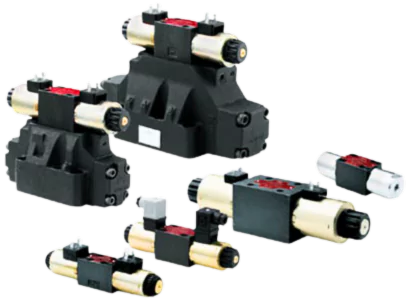
Solenoid Operated Directional Valves
The standard solenoid operated directional valve for industrial sub-plate mounting. A single or double solenoid shifts the spool to start, stop or reverse a cylinder or motor. Larger valves use a small solenoid valve as the pilot stage for a hydraulically shifted main spool.
- 4/2 and 4/3 functions with a choice of spool symbols
- NG06 and NG10 direct-acting; larger sizes pilot-operated
- Single or double solenoid, spring centred or detent
Solenoid Poppet (Seat) Valves
A seated hydraulic solenoid valve closes against a seat for practically leak-free shut-off. It is used to hold cylinders in position, isolate accumulators and switch pressure on clamping and safety circuits.
- 2/2 and 3/2 functions
- Normally open or normally closed
- Practically zero leakage in the closed position
Screw-in Cartridge Solenoid Valves
Screw-in cartridge solenoid valves fit into a cavity in a manifold block, making compact, leak-resistant hydraulic circuits for power packs and mobile machines.
- Poppet cartridge valves: 2/2 and 3/2 way
- Spool cartridge valves: 2/2, 3/2, 4/2 and 4/3 way
- UNF and metric cavities; manual override option available
Proportional Solenoid Valves
A proportional solenoid produces a force in proportion to the input current instead of simply switching on and off. It is used in proportional directional, pressure and flow valves for smooth, variable control.
- Used for soft start and stop, speed and force control
- Works with valve amplifiers and cable sets
- Selection based on control signal and required response
Replacement Solenoid Coils and Connectors
A burnt or damaged coil is one of the most common solenoid valve failures. On most valves with an oil-immersed (wet-pin) armature the coil can be changed without draining the circuit.
- Coils for NG06 and NG10 multi-brand control valves
- 12 V DC, 24 V DC, 110 V AC and 230 V AC
- Standard DIN plug connections with multiple pin options
AC or DC: Choosing the Right Coil
- DC coils switch more softly, are not damaged if the spool sticks, and suit PLC and battery-powered systems.
- AC coils switch faster but draw a high inrush current; if the spool cannot complete its stroke the coil overheats and burns out.
- Rectifier plugs allow a DC coil to run from an AC supply on many valves.
- Match the voltage exactly: a coil run above or below its rated voltage will overheat or fail to switch.
Troubleshooting a Hydraulic Solenoid Valve
- Valve does not switch: check supply voltage at the connector, the coil resistance and the manual override. If the override shifts a solenoid operated directional valve, the fault is electrical.
- Coil burns out repeatedly: look for a sticking spool caused by contaminated oil, a wrong voltage, or moisture in the connector.
- Cylinder drifts: spool valves leak slightly; use a seated valve or a pilot-operated check valve where a load must be held.
- Prevent failures: keep the oil clean with the right hydraulic oil filters and regular oil cleanliness measurement.
How to Order the Right Hydraulic Solenoid Valve
Share these details with Techknow, your hydraulic solenoid valve supplier, when you enquire:
- Valve model code from the nameplate, or the function and spool symbol
- Coil voltage (AC or DC), power rating and connector type
- Mounting: sub-plate size or cartridge cavity
- Maximum pressure and flow
- Manual override and any special requirements
With this information, our team can recommend the correct valve or coil and confirm pricing and availability.
FAQ'S
A hydraulic solenoid valve is a valve operated by an electromagnet. When the coil is energised, the solenoid pushes a spool or poppet and changes the flow path, so a PLC, relay or push button can switch a hydraulic function on or off.
Directional control describes what the valve does: it routes oil to start, stop or reverse an actuator. Solenoid describes how it is operated. A solenoid operated directional valve is therefore one type of directional valve; others are operated by lever, pilot pressure or cam.
DC coils switch more softly, tolerate a stuck spool better and are common on mobile and PLC-controlled machines. AC coils switch faster but draw a high inrush current and can burn out if the spool cannot complete its stroke. Many valves can run on an AC supply through a rectifier plug with a DC coil.
Common causes are a supply voltage that does not match the coil rating, a spool jammed by contamination so an AC coil keeps drawing inrush current, a damaged connector or seal letting in moisture, and excessive switching frequency or ambient temperature.
Spool-type solenoid valves have a small internal leakage across the spool. Seated (poppet) solenoid valves close against a seat and are practically leak-free, so they are preferred where a load or pressure must be held.
Usually yes. On most valves with an oil-immersed (wet-pin) armature the coil can be removed without opening the hydraulic circuit. Share the coil voltage, power rating, connector type and valve model so we can supply the correct replacement coil.
Yes. We supply solenoid valves for new power units and machines and as replacements on existing equipment. Send the model code or the circuit requirement and our team will recommend a suitable valve from the brands we supply.
Need a Hydraulic Solenoid Valve Supplier?
Send us your valve or coil model code, voltage and connector type. Our team will recommend the right solenoid valve or replacement coil and share pricing and availability.
RELATED HYDRAULIC VALVES & PRODUCTS
Other valves and components that work with your solenoid valves.