Hydraulic Directional Control Valves for Industrial and Mobile Circuits
A hydraulic directional control valve is the valve that tells the oil where to go. It connects the pump to one side of a cylinder or motor, returns the other side to tank, and so decides whether the actuator extends, retracts, rotates, stops or holds. In most hydraulic circuits it is the valve the operator or PLC actually switches.
Techknow Engineering Enterprise is a hydraulic directional control valve supplier for presses, machine tools, power units, steel and power plants, and mobile machines. We supply on/off, proportional and servo directional valves in spool and seated designs, with solenoid, pilot, lever or mechanical operation.
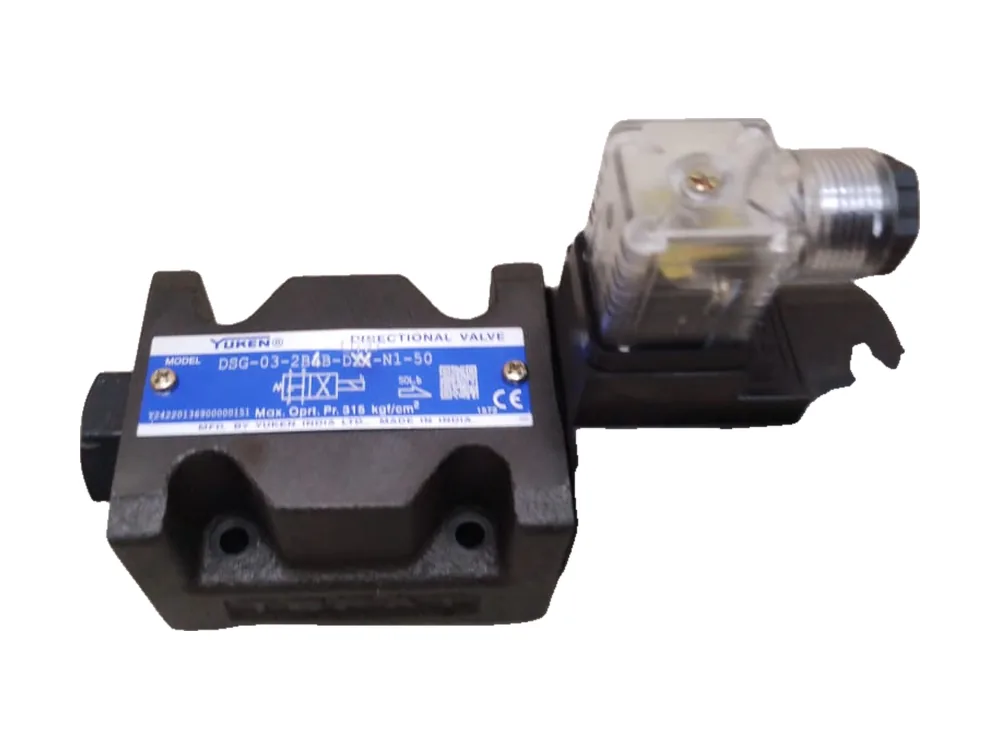
Techknow is an Authorized HYDAC Distributor and also supplies Rexroth, Parker, Yuken, Eaton-Vickers, Bucher, Sun, Beiri and Hawe valves, so we can match a new hydraulic directional control valve to your circuit or find a replacement for the valve already on your machine. Our team checks size, spool symbol, voltage and mounting pattern before we quote, so the valve fits and works the first time.
Looking for the full valve range? Visit our hydraulic valves page. For electrically switched valves, coils and cartridge solenoid valves, see hydraulic solenoid valves.
How a Hydraulic Directional Control Valve Works
Every hydraulic directional control valve is described by its number of ports, its number of positions and how it is operated. Understanding these three points makes it easy to specify the right valve.
Spool Valves
A ground spool slides inside a precision bore. Lands on the spool open and close the paths between P (pressure), T (tank), A and B. Spool valves offer the widest choice of configurations and centre positions, and are the standard choice for industrial sub-plate mounting.
Seated (Poppet) Valves
A poppet or ball closes against a seat. Because there is no clearance to leak through, a seated hydraulic directional control valve can hold a load or pressure without drift, which is why it is used in clamping, holding and safety circuits.
Common Configurations
- 2/2: two ports, open or closed (on/off or shut-off duty)
- 3/2: three ports, two positions, for single-acting cylinders
- 4/2: four ports, two positions, for double-acting cylinders
- 4/3: four ports, three positions, with a choice of centre position
- Centre options: closed, open, tandem and float centres
Key Benefits
- Precise start, stop and reversal of cylinders and motors
- Standard mounting interfaces for easy replacement
- Choice of solenoid, pilot, lever or mechanical operation
- Proportional and servo options for smooth, variable motion
- Leak-free seated versions for load-holding duty
World-Class Brands,
LOCAL ENGINEERING SALES & SERVICE SUPPORT
One hydraulic directional control valve supplier for leading global brands, with local selection and replacement support





Authorized HYDAC Distributor in India
Techknow Engineering is an Authorized Distributor for HYDAC in India, supplying genuine HYDAC directional valves backed by OEM specifications and manufacturer support. We also distribute and supply Rexroth, Parker, Yuken, Eaton-Vickers, Bucher, Sun, Beiri and Hawe valves, so a single enquiry can cover every hydraulic directional control valve on your machine, along with the coils, sub-plates and seal kits that go with it.
Hydraulic Directional Control Valve Specifications
Typical ranges for the directional valves we supply. Exact ratings depend on valve type, size and brand.
Operating Pressure
Maximum operating pressure of up to 700 bar, depending on valve design and size.
Flow Rate
Flow rates of up to 1,100 lpm, with larger flows handled by pilot-operated valves.
Valve Sizes
Nominal sizes from NG06 to NG32 to standard sub-plate mounting patterns.
Actuation Methods
Solenoid, hydraulic pilot, pneumatic, hand lever and mechanical operation.
Solenoid Voltage
Standard coil voltages of 12 V, 24 V, 110 V and 230 V, with custom options available.
Mounting Options
Sub-plate and sandwich mounting, with multiple spool position configurations.
Powering Industries Across India
A hydraulic directional control valve is at work wherever a cylinder or motor has to start, stop or reverse, across every major industry.

Rolling, Pressing & Casting

Turbine Control & Emergency Backup

Turbine Governing & Dam Gates

Pitch Control & Braking Systems

Excavators, Cranes & Earthmovers

Press Shop, Body Shop & Assembly

Steering & Deck Machinery

Pulp Processing & Paper Production

Crushers, Kilns & Material Handling

Injection & Blow Moulding

Pressure Stabilization & Shutdown

Valve Actuation & Pressure Control
Why Choose Techknow as Your Hydraulic Directional Control Valve Supplier
The right valve, the right brand and support from people who understand hydraulic circuits.
14+ Years of Experience
Over a decade of helping Indian industry select, replace and maintain directional valves on presses, power units and mobile machines.
Multi-Brand Portfolio
An Authorized HYDAC Distributor and a supplier for Rexroth, Parker, Yuken, Eaton-Vickers, Bucher, Sun, Beiri and Hawe.
Model Code Matching
Send us the nameplate of your old valve and we will check for a direct or interchangeable replacement.
Technical Guidance
Help with spool symbols, centre positions, coil voltages and connector types before you order.
Pan-India Supply
Supply to Mumbai, Pune, Gujarat, Chennai, Hyderabad, Delhi and other industrial centres across India.
Coils, Seal Kits & Sub-plates
The accessories that keep a directional valve running, from one supplier.
Types of Hydraulic Directional Control Valve We Supply
Open each category for a description, typical uses and what to specify.
On/Off Solenoid Directional Valves
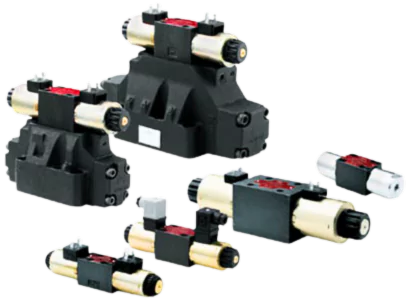
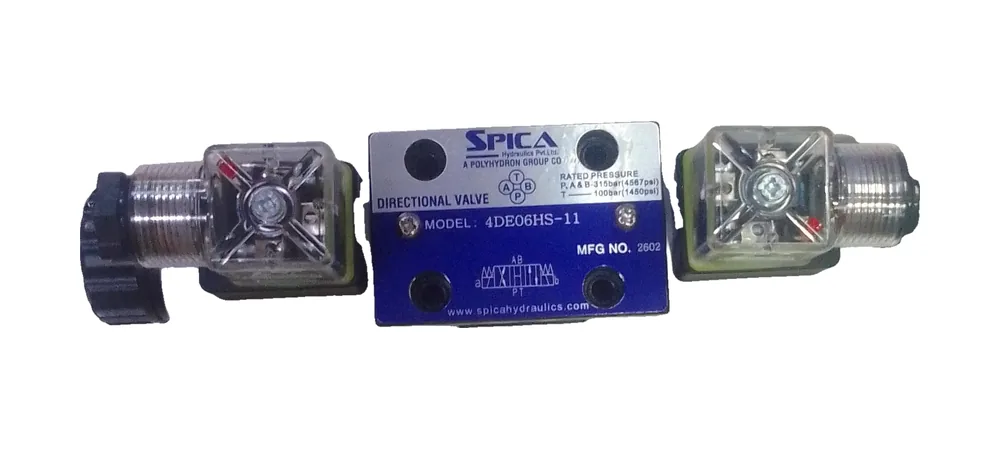
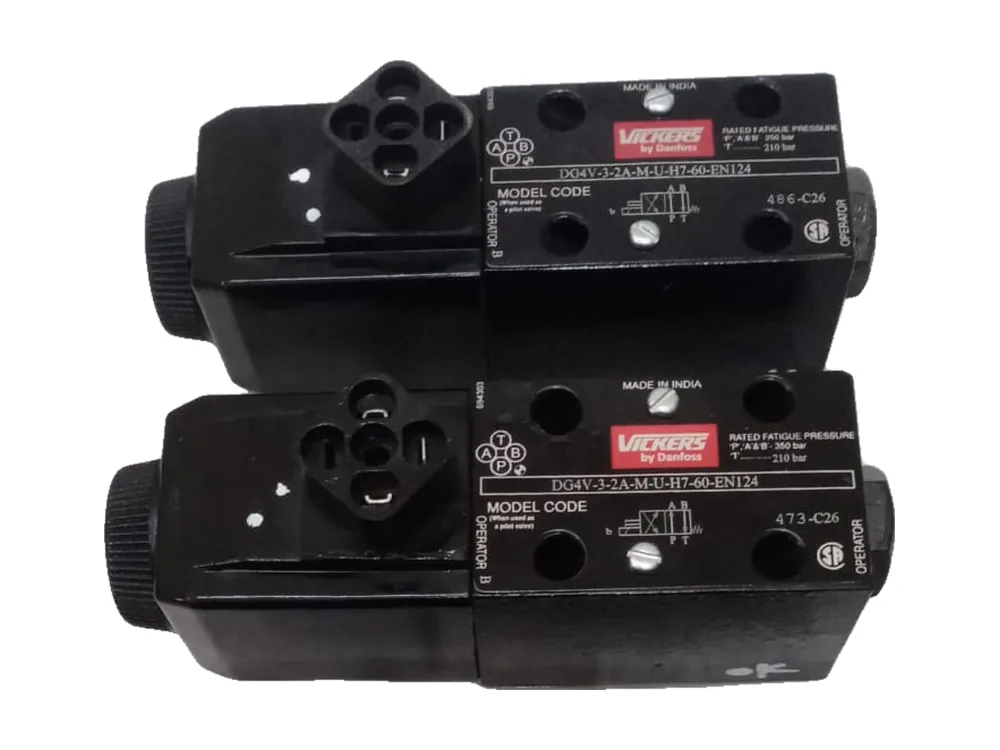
The most widely used hydraulic directional control valve. A solenoid shifts the spool directly into one of two or three fixed positions. Typical sizes are NG06 and NG10 for flows of small and medium power units.
For coils, connectors and cartridge solenoid valves, see our hydraulic solenoid valves page.
- 4/2 and 4/3 spool versions with a choice of centre positions
- DC and AC coils, plug connectors and manual override
- Sub-plate mounting to standard patterns
Pilot-Operated Directional Valves
For larger flows, a pilot-operated hydraulic directional control valve uses a small solenoid valve as a pilot stage to shift a large main spool hydraulically. This keeps the solenoid small while the valve handles high flow at sizes up to NG32.
- Used on large presses, steel plant and power plant hydraulics
- Adjustable switching time on many designs
- Internal or external pilot supply and drain options
Proportional Directional Valves
A proportional hydraulic directional control valve moves its spool in proportion to an electrical signal, so it controls both direction and speed. It gives smooth acceleration and deceleration without extra flow control valves.
- With or without on-board electronics
- Used for smooth motion on presses, injection moulding and test rigs
- Valve amplifiers and cable sets available
Servo Directional Valves
Servo valves offer very fast response and high accuracy for closed-loop position, speed and force control, for example in test systems, rolling mills and turbine governing.
- High dynamic response for closed-loop control
- Require clean oil and correct filtration
- Model code matching for replacements
Manual and Mechanically Operated Valves
A hand lever, cam or roller operated hydraulic directional control valve is used where no electrical control is needed, on test benches, simple power packs and mobile equipment.
- Spring return or detent versions
- Lever, cam, roller and pneumatic operation
- Simple, robust and easy to maintain
Seated (Poppet) Directional Valves
Direct-acting and pilot-operated 2-way poppet valves close against a seat for practically leak-free shut-off, ideal for clamping, holding and accumulator circuits.
- Leak-free holding of loads and pressure
- 2/2 and 3/2 functions
- Often combined with pilot-operated check valves
How to Choose the Right Hydraulic Directional Control Valve
Share these details with Techknow, your hydraulic directional control valve supplier, when you enquire:
- Function: number of ports and positions, for example 4/3 or 4/2
- Spool symbol: the centre position and flow paths you need
- Size and flow: NG size, maximum flow in lpm and operating pressure in bar
- Operation: solenoid voltage (AC or DC), connector type, manual override, or pilot, lever or mechanical operation
- Control: on/off, proportional or servo
- Fluid and seals: mineral oil or special fluid, and NBR or FKM seals
- Existing model code: the nameplate of the valve you are replacing
With this information, our team can recommend a suitable valve and confirm pricing and availability.
Keeping a Hydraulic Directional Control Valve Working
- Keep the oil clean: contamination is the main cause of sticking spools and internal leakage. Check your hydraulic oil filters and filter elements, and measure oil cleanliness regularly.
- Use the correct coil: a wrong voltage or a spool that cannot shift will burn out an AC coil quickly.
- Tighten mounting bolts to the specified torque: over-tightening can distort the valve body and jam the spool.
- Replace seals during service: use the matching seal kit for the valve type.
FAQ'S
A hydraulic directional control valve decides which path the oil takes. By shifting a spool or opening a poppet, it connects the pump to one side of a cylinder or motor and the other side to tank, so the actuator extends, retracts, rotates, stops or holds position.
The first number is the number of working ports (for example P, T, A and B) and the second is the number of switching positions. A 4/3 valve has four ports and three positions, usually with a centre position for stop or neutral. A 4/2 valve has two positions and no centre.
It depends on the circuit. A closed centre blocks all ports and holds the actuator, a tandem centre unloads the pump to tank while holding the actuator, and a float centre lets the actuator move freely. For an exact match, share the spool symbol or model code of your existing valve.
Spool valves are versatile and available in many configurations, but they have a small internal leakage across the spool. Seated or poppet valves close against a seat and are practically leak-free, which makes them useful where a load must be held without drift.
It can be operated by solenoid, by hydraulic pilot pressure, by hand lever, mechanically by a cam or roller, or by an electronic proportional or servo signal. Larger sizes are usually pilot-operated, with a small solenoid valve acting as the pilot stage.
The most common causes are contaminated oil, varnish on the spool, a burnt or wrongly rated solenoid coil, and incorrect mounting torque that distorts the valve body. Good filtration and correct coil voltage prevent most failures.
Yes. Send the nameplate details or full model code and we will check for a direct replacement or an interchangeable valve with the same size, spool type, voltage and mounting pattern from the brands we supply.
Need a Hydraulic Directional Control Valve Supplier?
Send us your valve model code, spool symbol or circuit requirement. Our team will recommend the right directional valve and share pricing and availability.
RELATED HYDRAULIC VALVES & PRODUCTS
Other valves and components that work with your directional valves.