
Understanding the Role of Hydraulic Accumulators in Industrial Systems
Hydraulic Accumulators are unsung heroes of industrial systems, quietly working behind the scenes to enhance efficiency, manage pressure, and stabilize fluid power systems. Whether you’re a seasoned engineer, a system designer, or new to industrial hydraulics, understanding hydraulic accumulators is key to optimizing system performance and ensuring long-term reliability.
We will explores everything you need to know about hydraulic accumulators, from the different types and their working principles to practical applications and maintenance tips. By the end, you’ll not only understand their role but also have actionable insights to improve your system’s efficiency and safety.
Introduction to Hydraulic Accumulators
A hydraulic accumulator is a pressure-storage reservoir widely used in hydraulic systems. It stores hydraulic fluid under pressure, which can be released when needed to support a wide range of system functions.
Why are they important? Because they:
- Cushion pressure spikes
- Improve energy efficiency
- Provide emergency energy backup
- Regulate fluid flow to maintain consistent performance
Hydraulic accumulators are integral to many industries, enabling equipment to function smoothly under varying loads and pressures. They help extend component life, reduce downtime, and provide a cost-effective way to improve system performance.
Types of Hydraulic Accumulators
Choosing the right accumulator depends on your specific application. Below are the main types of hydraulic accumulators:
1. Bladder Accumulators
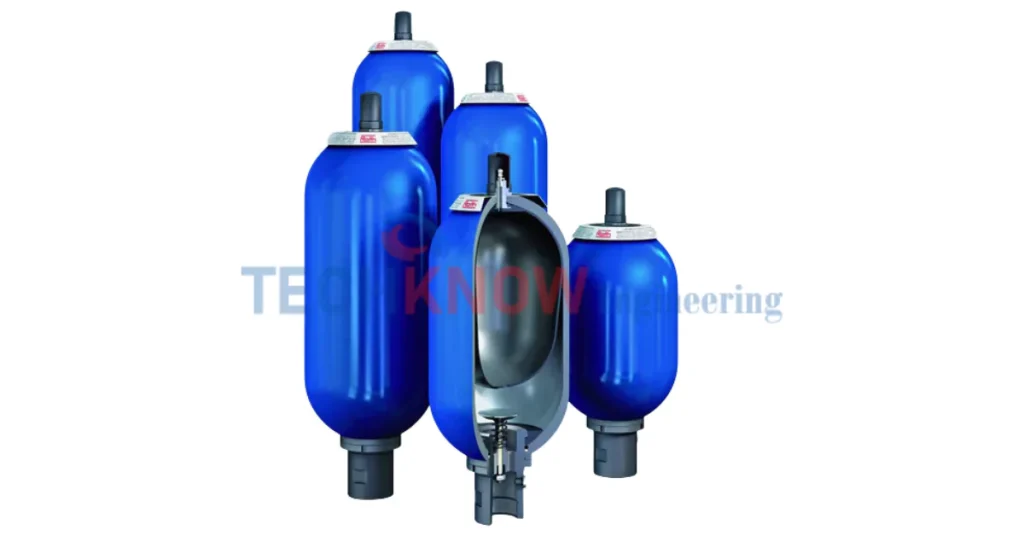
Bladder accumulators consist of a rubber bladder inside a steel shell. Hydraulic fluid is stored in the space surrounding the bladder, while the bladder itself is pre-charged with gas (usually nitrogen).
Advantages:
- Quick response to system demands
- Ideal for cushioning and energy storage
- Easy to maintain and replace
2. Diaphragm Accumulators
Diaphragm accumulators feature a flexible diaphragm separating the gas and hydraulic fluid. These are typically used in low-volume applications where compact design is crucial.
Advantages:
- Compact and lightweight
- Cost-effective for small-scale systems
- Suitable for pulsation damping
3. Piston Accumulators
Piston accumulators have a piston that separates the gas and hydraulic fluid within a cylindrical steel shell. These accumulators are robust and versatile, often used in high-pressure systems.
Advantages:
- High energy capacity
- Tolerates high pressures and volumes
- Customizable to meet various requirements
Specialized Accumulators and Accessories
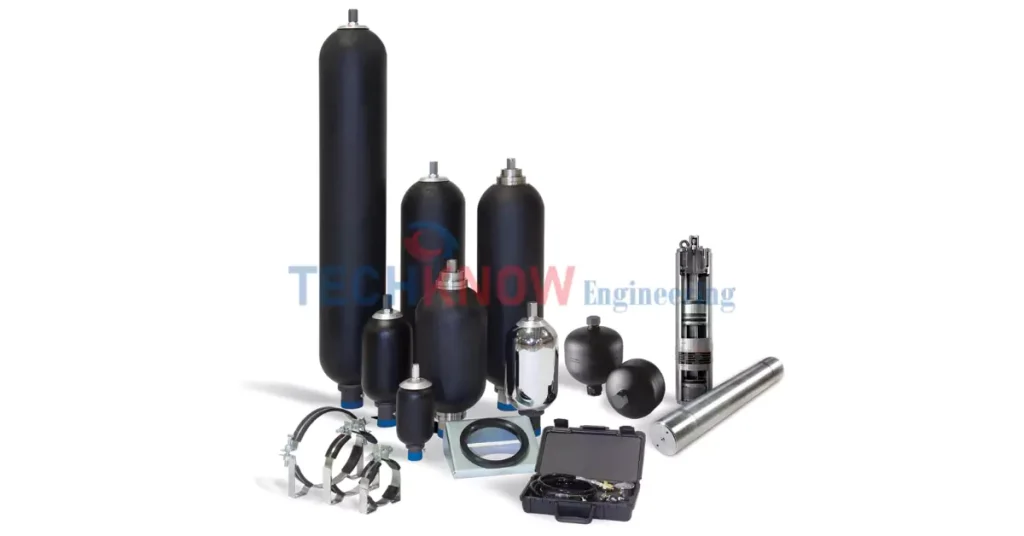
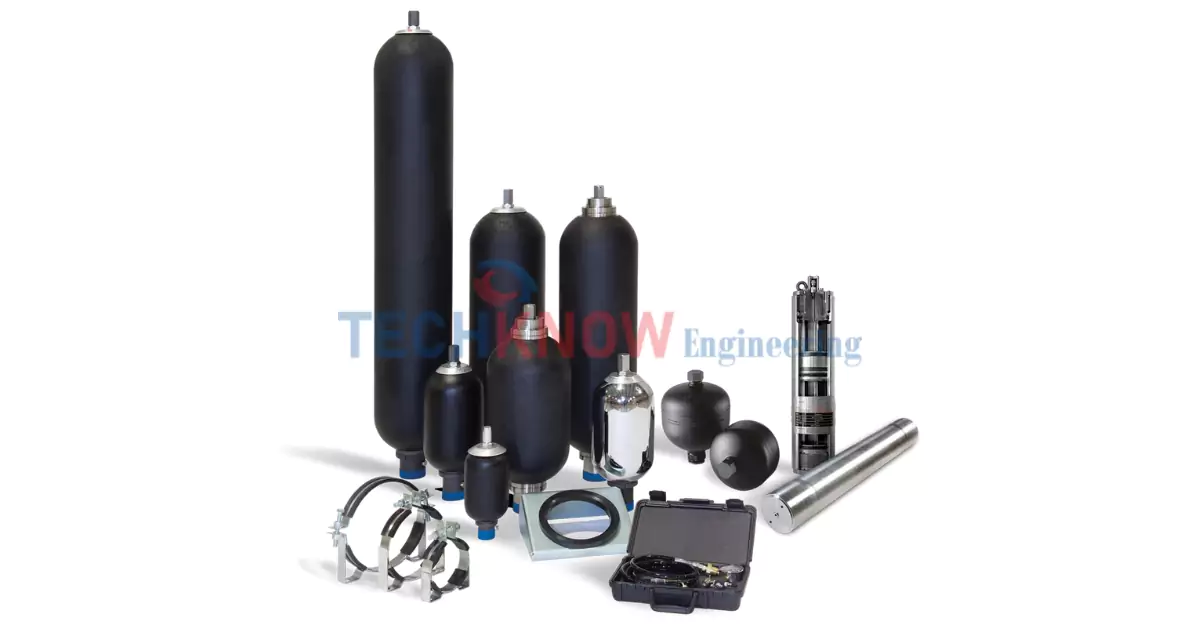
Beyond the main categories, there’s also a range of specialized accumulators and accessories, such as accumulator charging kits and high-pressure booster units, available to meet unique industrial needs.
At Techknow Engineering Enterprise, we provide all the types listed above along with spares, accessories, and maintenance stations to help you build or maintain a robust hydraulic system.
Working Principles and Functions
The magic of a hydraulic accumulator lies in its ability to store and release energy when required. Here’s how it works:
- Energy Storage:
- Gas (usually nitrogen) is pre-charged into the accumulator, creating pressure.
- Hydraulic fluid enters the accumulator, compressing the gas further and storing potential energy.
- Energy Release:
- When the system requires additional power (e.g., during peak demand), the pressurized fluid is released back into the system.
- This helps compensate for pressure drops and maintain operational stability.
Key Functions
- Pressure Compensation: Accumulators regulate hydraulic pressure by absorbing shocks and maintaining consistent fluid flow.
- Energy Savings: By storing potential energy and releasing it when needed, accumulators reduce energy demand on pumps and motors.
- Emergency Backup: In case of pump failure, an accumulator can temporarily supply hydraulic energy to complete critical motions or stop operations safely.
Applications in Industrial Systems
Hydraulic accumulators find applications across a wide array of industries due to their versatility and reliability. Here are some of the most common use cases:
- Manufacturing and Automation: Hydraulic accumulators are used to power systems like injection molding machines and automated conveyor belts. They stabilize hydraulic pressure and improve operational efficiency.
- Renewable Energy: Accumulators play a pivotal role in wind turbines and solar tracking systems. They help regulate hydraulic yaw systems, ensuring turbines operate efficiently under varying wind conditions.
- Construction Equipment: From excavators to loaders, accumulators enhance system performance by cushioning pressure spikes and enabling smoother, safer operations.
- Oil and Gas: The oil and gas industry relies on accumulators for blowout preventer systems, ensuring immediate and reliable responses during emergencies.
- Aerospace and Defense: Accumulators provide critical energy reserves in aerospace applications like landing gear systems and hydraulic actuators.
Whether you’re involved in heavy industrial equipment or specialized applications, the right accumulator can deliver significant performance benefits.
Maintenance and Safety Tips
Proper maintenance is critical to ensure your accumulator performs reliably and safely. Here are some best practices to follow:
1. Inspect Regularly
Conduct regular visual inspections for leaks, corrosion, or physical damage to the accumulator. Early detection prevents small issues from escalating.
2. Check Pre-Charge Pressure
Maintain the correct nitrogen pre-charge pressure as specified by the manufacturer. A drop in gas pressure can reduce the accumulator’s efficiency.
3. Replace Worn Components
Bladders, diaphragms, and seals can wear out over time, leading to leaks or reduced performance. Replace these components as needed using our Techknow Engineering Enterprise Spares.
4. Monitor High-Pressure Systems Closely
For high-pressure applications, ensure accumulators are fitted with safety accessories like relief valves and pressure gauges to prevent malfunctions.
5. Train Your Team
Ensure everyone handling the equipment is trained in basic accumulator safety. Mistakes during maintenance or installation can lead to accidents.
Safety always comes first. By following these maintenance tips, you’ll increase the lifespan of your accumulators and ensure system reliability.
Optimizing System Performance with Accumulators
Hydraulic accumulators are essential to improving efficiency, reliability, and safety across various industrial systems. By understanding the types, working principles, and applications of accumulators, businesses can unlock untapped potential in their hydraulic systems.
At Techknow Engineering Enterprise, we offer a diverse range of accumulators and accessories designed to meet the unique needs of your operations. Our products are built for durability, precision, and performance.
Looking to enhance your hydraulic systems? Explore our range of bladder accumulators, diaphragm accumulators, piston accumulators, and more. Whether you’re building a new system or upgrading an existing one, we’re here to help.
Contact us today and experience the Techknow difference.