

Hydraulic and lubrication systems are the lifeblood of industrial machinery. When the oil is clean, everything runs smoothly. But when contamination enters the mix, efficiency drops, components wear out and expensive equipment grinds to a halt.
Filtration systems are your first line of defense against this contamination. However, a filter is only effective if it is changed at the right time. Change it too early, and you are wasting money on unused element life. Change it too late, and the filter goes into “bypass mode,” allowing dirty fluid to circulate through your sensitive components.
This is where the Clogging Indicator becomes essential. It acts as the voice of your filtration system, telling you exactly when maintenance is required. Yet, many operators and technicians overlook these devices or misinterpret their signals.
At Techknow Engineering Enterprise, we believe that understanding your instrumentation is key to operational efficiency. This guide will walk you through the mechanics of clogging indicators and how to accurately read the different types available on the market today.
Understanding the Basics: Differential Pressure
Before we look at the specific gauges and switches, we need to understand what the indicator is actually measuring. It isn’t measuring dirt directly; it is measuring pressure drop, technically known as differential pressure ($\Delta$P).
Think of water flowing through a garden hose. If you put your thumb over the end, pressure builds up behind your thumb. In a hydraulic system, the filter element acts like a permeable barrier. As the filter captures dirt and debris, the holes in the filter media get plugged. It becomes harder for the fluid to pass through.
The pressure on the “inlet” (dirty) side of the filter rises, while the pressure on the “outlet” (clean) side drops. The clogging indicator monitors the difference between these two points. Once that difference hits a specific preset limit usually just before the filter bypass valve opens the indicator triggers an alert.
Types of Clogging Indicators and How to Read Them
Not all indicators look the same or communicate in the same way. Depending on your specific machinery, the criticality of the application and the environment, you might encounter different styles.
Here is a breakdown of the four main categories used in the industry and how to interpret their signals.
1. Visual Clogging Indicators
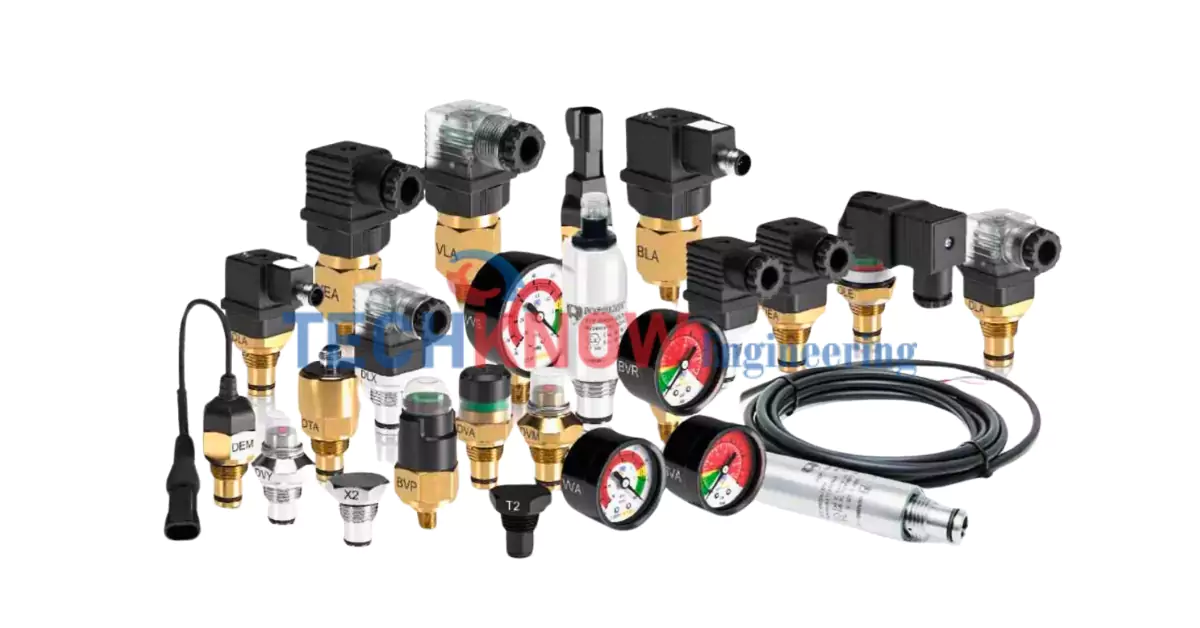
These are the most common and cost-effective devices found on standard Hydraulic Units. They require a technician to physically look at the filter housing to check the status. They are mechanical devices that function without any power source.
How to read them:
- The Pop-Up Button: This is the simplest form. When the pressure differential remains low, the button stays flush with the housing. As the filter clogs and pressure builds, a red button pops up. If you see the button raised, it is time to change the element. Note that many of these have a manual reset, so you must push the button back down after maintenance.
- The Color Gauge (Manometer): These look like small clock faces or sector gauges divided into colored zones.
-
- Green Zone: The system is healthy. The fluid is flowing freely.
- Yellow Zone: Warning. The filter is accumulating dirt, but it is not critical yet. Plan for maintenance soon.
- Red Zone: Critical. The pressure drop is too high. The filter is likely in bypass, and the element must be changed immediately.
Pro Tip: Visual indicators generally only give an accurate reading when the system is running at operating temperature. Cold oil is thicker and can cause a false “Red” reading (more on this later).
2. Electrical Clogging Indicators
In complex industrial plants or mobile machinery where the filter is tucked away inside a chassis, a visual indicator isn’t practical. You can’t fix what you can’t see. Electrical indicators solve this by using a switching contact.
How to read them:
Instead of looking at the filter, you look at your control panel or dashboard. These indicators work as a binary switch (On/Off).
- Normal Operation: The electrical circuit remains open (or closed, depending on logic), and the dashboard light remains off.
- Clogged State: When the differential pressure hits the limit (e.g., 2.5 bar or 5 bar), a piston inside the indicator moves, triggering a microswitch. This sends a signal to the control unit.
- The Signal: Usually, this illuminates a “Check Filter” light on an operator’s console or triggers an audible alarm.
Because these connect to the machine’s PLC (Programmable Logic Controller), they can be programmed to shut down the machine automatically if the filter isn’t changed within a certain timeframe, preventing catastrophic damage.
3. Electronic Clogging Indicators
For modern, Industry 4.0-ready facilities, a simple “on/off” switch often isn’t enough. Maintenance teams want to predict failures, not just react to them. Electronic indicators use sensors to provide continuous monitoring.
How to read them:
These devices transmit an analog signal (typically 4-20 mA or 0-10 V) to the central control system.
- Trend Analysis: You don’t just see a “blocked” signal. You can view a graph on your computer screen showing the gradual rise in differential pressure over time.
- Predictive Maintenance: If you see the pressure rising steadily, you can predict that the filter will need changing in exactly three days. This allows Techknow Engineering Enterprise clients to schedule downtime during off-hours rather than interrupting peak production.
- Cold Start Suppression: Many electronic indicators are smart enough to ignore high-pressure readings caused by cold, viscous oil during startup, eliminating false alarms.
4. Combined Visual + Electrical Indicators
Why choose between a local check and a remote alarm when you can have both? This is arguably the most robust solution for critical systems.
How to read them:
These units feature a visual gauge directly on the component and an electrical connection for the control room.
- The Technician’s View: A maintenance engineer walking the floor can visually inspect the gauge (Green/Red) during daily rounds to verify the condition.
- The Operator’s View: If the technician misses the visual cue, the electrical signal will eventually trigger a warning light in the control room.
This redundancy ensures that a clogged filter never goes unnoticed. If the bulb in the control room burns out, the visual gauge is still there. If the visual gauge is covered in grease, the electrical signal still works.
Best Practices for Maintaining Clogging Indicators
Reading the Indicator is only step one. To ensure your readings are accurate, follow these maintenance best practices.
Beware of “Cold Starts”
Viscosity plays a huge role in pressure readings. When hydraulic oil is cold, it is thick like honey. Pushing thick oil through a fine filter requires high pressure. This often triggers the clogging indicator, suggesting the filter is blocked when it is actually clean.
- The Fix: Only take readings when the fluid temperature is between 30°C and 60°C (depending on your oil type). Some modern indicators have “thermal lockout” features that prevent the signal from triggering below a certain temperature.
Don’t Ignore the Reset
If you are using a visual indicator with a pop-up button or a “maximum value memory,” you must manually reset it after changing the filter element. If you forget this step, the indicator will continue to show “Red,” leading to confusion and potentially unnecessary filter changes later.
Check the Indicator Itself
Indicators are robust, but they aren’t invincible. Vibration, heat, and electrical surges can damage them. During your annual system maintenance, inspect the indicator. Does the needle move freely? Is the electrical connector tight and free of corrosion? A broken indicator is worse than no indicator because it gives you a false sense of security.
Keep Your Systems Flowing
A Clogging Indicators is a small component with a massive responsibility. It stands between clean, efficient operation and costly downtime. By understanding the difference between visual, electrical and electronic types, you can ensure you are interpreting your machinery’s health correctly.
Whether you are upgrading a single hydraulic power pack or outfitting an entire plant with predictive maintenance sensors, choosing the right monitoring equipment matters.
At Techknow Engineering Enterprise, we specialize in helping you select the right filtration and monitoring solutions for your specific needs. Don’t wait for the bypass valve to open start listening to what your system is telling you today.